 Try Onsa
TL;DR: A cautionary tale: $440K spent on AI sales tools that failed because the team expected AI to think, not just execute. The lesson: AI sales tools need your brain for strategy, ICP definition, and quality control. They handle the volume; you provide the judgment.

I had a good laugh this morning, but then I realized it’s actually terrifying: Deloitte reportedly charged $440,000 for a report that was clearly “written” by AI—hallucinations and all. If one of the world’s biggest consultancies can fall into the “lazy automation” trap, your sales team isn’t immune.
In this post, we’ll look at why the obsession with pure automation is backfiring and how to use AI sales tools without losing your professional edge.
The Deloitte story is a classic example of what happens when we stop checking the output. They delivered a report to a government agency that contained made-up facts and typical AI-isms. When you’re charging nearly half a million dollars, “the AI did it” isn’t a valid excuse.
In B2B sales, we see this constantly. Founders and SDRs get excited about new ai sales tools, blast out 1,000 emails, and then wonder why their domain reputation is in the trash and no one is booking meetings. The problem isn’t the AI; it’s the lack of oversight.
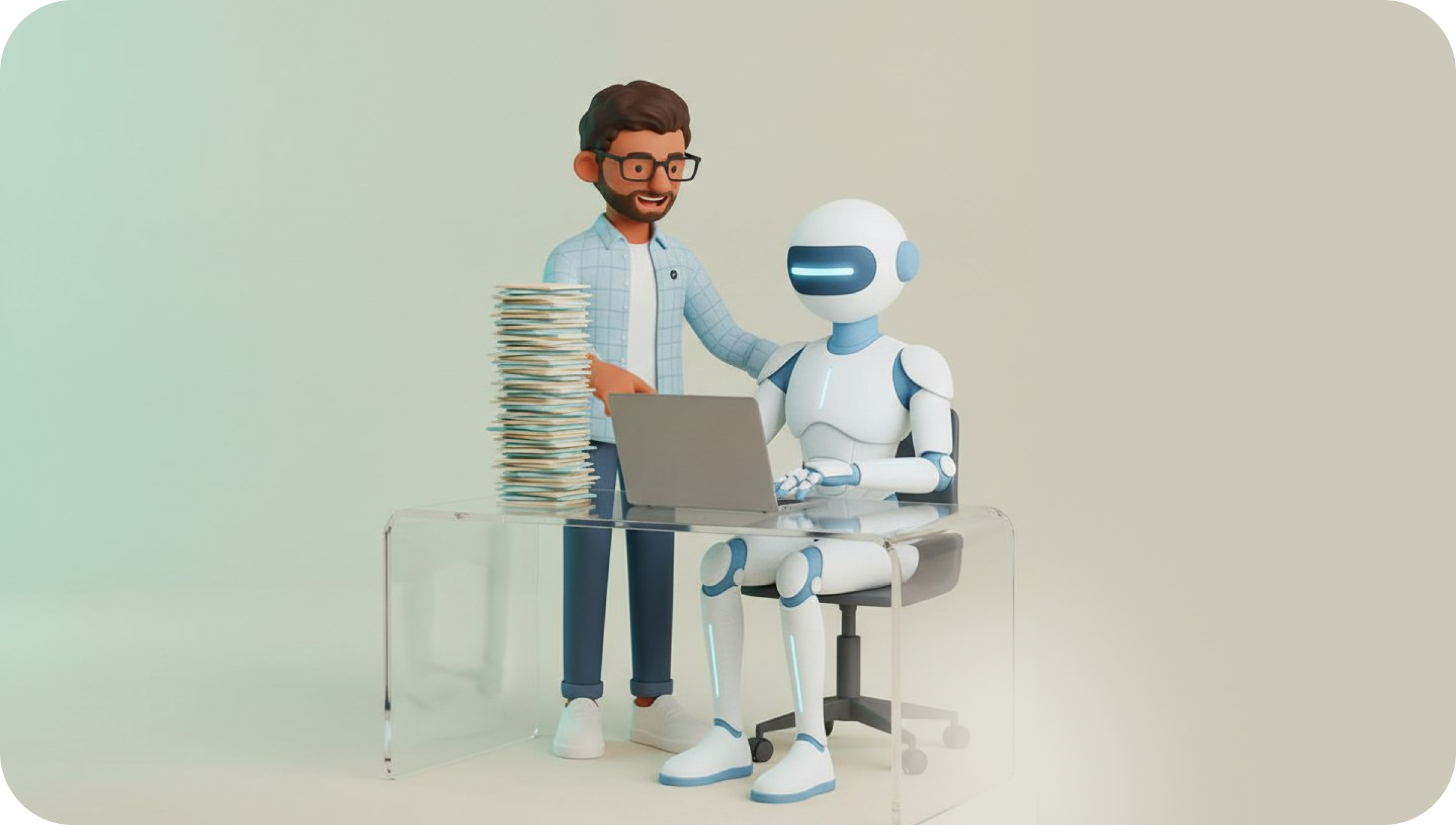
The temptation in sales is always to do more, faster. We want the “magic button” that finds leads, writes the perfect pitch, and closes the deal while we sleep. But the Deloitte fail proves that “set and forget” is a myth.
When you use AI for sales outreach, the tool should be your co-pilot, not the pilot. If your AI-generated LinkedIn message or email sounds like a generic robot, your prospect—who is already drowning in 50 other AI-generated messages—will hit “spam” faster than you can say “large language model.”
This situation reminded me of why I constantly revisit the work of Hans Rosling (author of Factfulness). He championed critical thinking and a data-driven worldview. He taught us to look past the surface-level drama and actually analyze the reality of a situation.
As sales professionals, we need to apply that same “Factfulness” to our workflows. Before you hit “send” on an automated campaign:
1.
Is this lead actually a fit, or did the AI just scrape a keyword?
2.
Does this sound like a human conversation or a Wikipedia entry?
3.
I’ve actually added “Rewatch Rosling” to my weekend plans. It’s a great palate cleanser for the digital noise we deal with every day.

At Onsa, we’re building AI-powered tools, so you might think I’d be the first to defend the “automate everything” crowd. Quite the opposite. We believe the best ai sales tools are the ones that give you time back to do the thinking that AI can’t do.
Use AI to summarize research, draft initial structures, and handle the repetitive data entry. But use your own brain to add the nuance, the empathy, and the strategic “why” that actually closes high-ticket B2B deals.
The takeaway: Don’t be the $440k mistake. Use AI to scale your intelligence, not to replace it.
P.S. If you want to see how we’re building AI that actually helps sales teams think better (rather than just spamming harder), give Onsa a try here.
A: No. While AI can handle 80% of the heavy lifting—like lead research and drafting—the final 20% (strategy, nuance, and relationship building) requires a human. The most successful teams use AI to augment their reps, not replace them.
A: Always use “Human-in-the-loop” workflows. Use AI to generate a “60% draft,” then have a human editor add specific personal observations or industry insights that a bot wouldn’t know.
A: Absolutely. Checking a well-drafted AI email takes 30 seconds, while writing one from scratch takes 10 minutes. The productivity gains are massive, provided you don’t skip the quality control step.
→ AI Won't Take Your Job - Tasks Matter