 Try Onsa
TL;DR: A real case study of turning $3K in monthly ad spend into $70K in pipeline using AI-driven B2B sales strategies. The key: AI-powered lead scoring and personalized outreach doubled conversion rates while cutting cost per qualified lead by 60%.

I used to watch our sales team spend 15 minutes researching every single lead (there's a faster way to build your ICP) (there's a faster way to build your ICP) before making a call. LinkedIn deep-dives, Google Scholar searches, company news—you name it. One day I did the math: that’s 3+ hours per day just on research. We weren’t running a sales team; we were running a library.
This is exactly the problem Alma, an immigration legal tech company, came to us with. Their AEs were drowning in manual research. The results? They invested $3k in AI-powered outreach automation and walked away with $50-70k in revenue. Here’s how they did it—and how you can too.
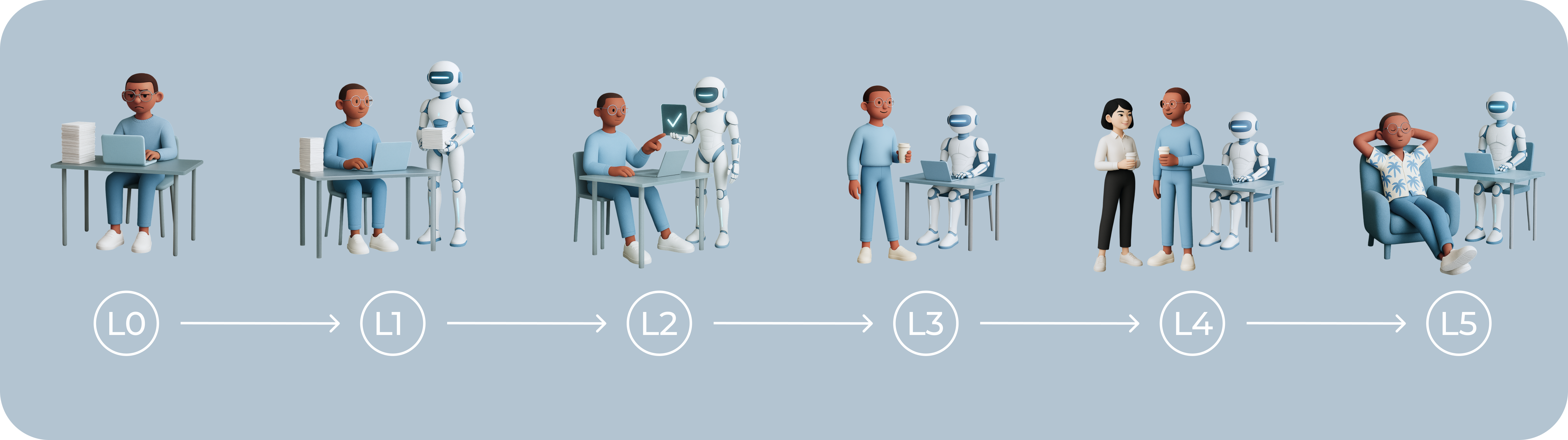
Most sales leaders think AI is just about writing emails faster. That’s Level 1 thinking. To really scale, you need to understand where your team sits on what I call the Autonomy Ladder:
If you’re still at L0 or L1, your competitors are already lapping you. Alma moved up to L3 and gained 5x competitive velocity.
Here’s what changed at Alma. Their AEs were doing 10-15 minutes of research per lead—LinkedIn profiles, company databases, even Google Scholar for immigration law context. With 20+ leads per day, that’s 3 hours gone before anyone picks up a phone.
We implemented an AI-powered qualification layer. Research time dropped to 3 minutes per lead.
The math changed completely:
- Before: 3 hours of research + 2 hours of actual selling = 5 hour workday
- After: 30 minutes of research + 4.5 hours of selling = same 5 hours, but actually selling
That extra 2.5 hours went into high-leverage activities: talking to customers, closing deals. They invested $3k in the automation and generated $50-70k in revenue.

You don’t need a massive overhaul. Here’s what you can automate this week:
Looking 2-5 years out, the traditional SDR/AE/CS split is going to blur. I’m seeing the emergence of what I call the GTM Engineer.
In this future, AEs will only handle high-stakes calls. Everything else—qualification, booking, prep, follow-up—gets handled by autonomous systems. One person will run a revenue engine that used to need ten.
It sounds scary, but for teams that embrace it, it’s a superpower. You’re not replacing your sales team; you’re giving them an exoskeleton.
P.S. If you’re still manually researching leads, you’re basically donating your margin to competitors. We built Onsa to help teams hit L3 autonomy without the headache. Maybe worth a look?
A: Alma’s investment was around $3k for the initial automation setup. ROI was 17-23x within the first quarter. Your mileage may vary depending on deal sizes and sales cycle.
A: Absolutely. In fact, small teams benefit
A: Trying to automate everything at once. Start with the highest-friction, lowest-creativity tasks (research, logging, scheduling) and leave the actual selling to humans.
→ CH Robinson: $3B Market Cap With AI